Here’s a number that should grab your attention: the Yale World Fellows Program receives several thousand applications for just 16 spots each year. That’s an acceptance rate well under 1%. And yet, every year, mid-career professionals from Pakistan, India, Nigeria, Egypt, and other developing nations make it through.
The 2027 application cycle is now open. The deadline is September 4, 2026. If you’re serious about this fully funded fellowship, you need more than a generic overview. You need to understand exactly what the selection committee wants, how to write a personal statement that actually stands out, and what steps to take right now.
I’ve helped students navigate competitive fellowship applications for years. The Yale World Fellows Program is different from most scholarships — it’s not for students, it’s for practitioners who have already built something meaningful. Here’s everything you need to know.
What is the Yale World Fellows Program?
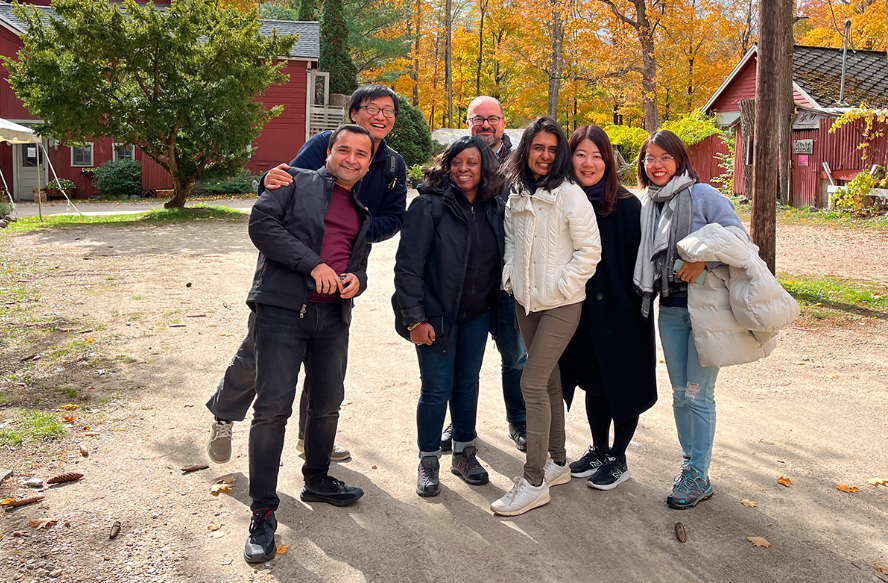
The Maurice R. Greenberg World Fellows Program is a four-month, fully funded residential leadership fellowship at Yale University. It runs from mid-August to mid-December each year. Fellows live in New Haven, audit Yale courses, attend weekly seminars, and build a global network of peers.
This is not a degree program. The fellowship is designed for mid-career professionals, not students or full-time academics. Since 2002, the program has built a network of over 400 World Fellows across 96 countries.
What makes this program unique? It brings together people from wildly different fields — government, NGOs, media, business, military, the arts. The cohort is geographically balanced and represents a wide range of professions, talents, and perspectives.
Key facts at a glance:
- Host: Yale University (Jackson School of Global Affairs)
- Location: New Haven, Connecticut, USA
- Duration: 4 months (August–December)
- Cohort size: ~16 Fellows per year
- Program type: Non-degree leadership fellowship
What Does the Yale World Fellows Program Cover?
The Yale World Fellows Program Scholarship 2027 in USA is fully funded. Here’s exactly what the compensation package includes:
| What’s Covered | Details |
|---|---|
| Living stipend | Taxable stipend to cover all living expenses in New Haven |
| Housing | Modest, furnished one- or two-bedroom apartment for the full 4 months |
| Medical insurance | Health insurance coverage during the program |
| Round-trip travel | Airfare from your home country to New Haven and back |
What’s NOT covered:
- Dependents/family members (you must make your own arrangements)
- Personal expenses beyond the stipend
- Any degree tuition (this is not a degree program)
How much is the stipend? Yale does not publish a fixed USD amount because the stipend is taxable and may vary. Past participants report it’s sufficient to cover living costs in New Haven comfortably, though it’s not a luxury lifestyle. Plan to budget carefully.
Who is Eligible for the Yale World Fellows Program 2027?
The eligibility requirements are specific. Read each one carefully — missing a single criterion means your application won’t move forward.
Citizenship: You must be a citizen of a country other than the United States. Dual US citizens are eligible, but the program gives strong preference to candidates whose work is focused outside the US.
Professional experience: You should be 5 to 25 years into your professional career. The average age of a World Fellow is 39, though there is no minimum or maximum age limit. The youngest ever accepted was 27.
Work status: You must be a non-academic practitioner. If your primary occupation is student or full-time scholar, you are not eligible.
English fluency: You must be fluent in English — able to read complex academic texts, give oral presentations, and build professional relationships in English. No TOEFL or IELTS required, but fluency will be assessed in interviews.
Residency: You must commit to living at Yale for the entire program (mid-August through mid-December).
Achievement: You must have an established record of extraordinary achievement and integrity.
Who typically gets in? Look at the biographies of past Fellows on the official website. They are people who have already made significant impact at regional, national, or international levels — not people who hope to make an impact someday.
Yale World Fellows Program Required Documents
The application is entirely online. No paper forms, no mailing, no application fee. Here’s what you need to prepare:
1. Résumé or CV (maximum 3 pages)
- Focus on leadership roles, significant projects, and measurable outcomes.
- Don’t just list job duties — show what you achieved.
- Keep it to 3 pages. They mean it.
2. Personal Statement (maximum 600 words)
- This is your most important document. More on this below.
- 600 words is short — every sentence must count.
3. Three Letters of Recommendation
- Choose people who can speak to your leadership, integrity, and impact.
- At least one should be from a supervisor or senior leader.
- Give your recommenders at least 4-6 weeks notice.
4. Brief Video Statement
- Comprehensive instructions appear inside the online application after you create an account.
- This is not a Hollywood production — they want to see and hear you, not fancy editing.
How to Apply for the Yale World Fellows Program 2027 Step by Step
Most guides stop at “go to the website and apply.” That’s useless. Here’s the actual step-by-step process, based on how the application system works.
Step 1: Check the official deadline. For the 2027 cohort, applications close September 4, 2026. Mark this date. Late submissions are not accepted.
Step 2: Go to the official application page. Visit https://worldfellows.yale.edu/the-program/application/. Do NOT use third-party sites — they don’t process applications.
Step 3: Create an account. You’ll need to register on the Yale application portal (apply.worldfellows.yale.edu). Use an email address you check regularly — this is how they’ll contact you.
Step 4: Start your application early. You can work on it at any time before the deadline and submit when ready. Don’t wait until the last week.
Step 5: Complete all sections of the online form. This includes personal information, professional background, and your career narrative. Be thorough.
Step 6: Upload your documents. Upload your CV (max 3 pages) and personal statement (max 600 words).
Step 7: Request your letters of recommendation. The system will send email requests to your recommenders. Do this early — recommenders are busy people.
Step 8: Record and upload your video statement. Follow the instructions inside the application portal. Keep it professional but natural.
Step 9: Review everything. Check for typos, missing information, and word count limits. Have someone else read your personal statement.
Step 10: Submit before the deadline. Once submitted, you cannot make changes. Final decisions are sent by email by the end of April.
Do you need a nomination? No. You can apply directly without a nomination. The program gives no preference to nominated candidates. Anyone can nominate someone, but it doesn’t increase their chances.
How to Write a Winning Personal Statement for Yale World Fellows
This is where most applicants fail. They write a generic “I want to change the world” essay that could apply to any scholarship. The Yale World Fellows committee reads thousands of these. Yours needs to be different.
The 600-word constraint is brutal. That’s about one page single-spaced. You have no room for fluff.
What the committee actually wants to read:
The selection criteria tell you exactly what they’re looking for:
- Record of extraordinary achievement and integrity
- Commitment to the good society and positive impact
- Promise of future leadership and global impact
- Capacity for critical, creative, entrepreneurial thinking
- Likelihood to benefit from and contribute to the program
Your personal statement must address ALL of these, not just one or two.
Structure that works:
Paragraph 1 (opening): Start with a specific problem you’ve worked on or a moment that defined your leadership journey. Not “I have always wanted to help people.” Try: “When I saw [specific situation] in my community, I realized that [insight about leadership or change].”
Paragraphs 2-3 (evidence): Give concrete examples of your achievements. Use numbers. “I led a team of 12 to increase access to clean water for 5,000 households.” Show impact at regional, national, or international level.
Paragraph 4 (why this program): Explain why Yale World Fellows specifically — not just “it’s prestigious.” What will you gain from the seminars, the Yale courses, the network? Be specific.
Paragraph 5 (what you’ll contribute): What will you bring to the cohort? What unique perspective from your country, sector, or experience will you share?
What to avoid:
- Generic opening sentences about your childhood
- Listing accomplishments without context
- Using jargon or academic language
- Exceeding 600 words (they will stop reading)
- Talking about what you want to do without showing what you’ve already done
The opening sentence difference:
❌ “I have always been passionate about social justice and believe that leadership is the key to creating change.”
✅ “In 2019, I watched 200 families in my district lose their homes to flooding — and I knew that waiting for government action wasn’t an option.”
One is generic. The other is specific, memorable, and shows you’ve actually done something.
Yale World Fellows Selection Criteria — What They Really Look For
The official criteria are listed on the application page. But here’s what they actually mean in practice:
“An established record of extraordinary achievement and integrity”
- They want to see that you’ve already made a tangible difference.
- “Extraordinary” means beyond what’s expected in your job.
- Integrity matters — they check references and look for consistency.
“A commitment to the good society”
- This is not about personal career advancement.
- They’re looking for people who serve others, not themselves.
- Your work should have a clear social or public benefit.
“A promise of a future career in leadership and notable global impact”
- They’re investing in your future, not your past.
- Show them a trajectory. Where are you headed?
- “Global impact” doesn’t mean you have to work at the UN — it means your work affects people beyond your immediate circle.
“A special capacity for critical, creative, entrepreneurial, and strategic thinking”
- Can you solve problems in new ways?
- Have you started something? Built something? Changed something?
- They want disruptors, not people who follow the rules.
“A likelihood to benefit from participation”
- Be honest about what you’ll gain.
- Show that you’re ready to learn, not just teach.
“A commitment to full-time residence and mentoring students”
- This is non-negotiable. You must be in New Haven for the full 4 months.
- Fellows are expected to speak on campus and mentor Yale students.
The unspoken criterion: Can you hold your own in a room with 15 other extraordinary people from completely different backgrounds? The program is intense. They need people who are collaborative, humble, and intellectually curious.
How Competitive Is the Yale World Fellows Program?
Extremely. The program receives several thousand applications for just 16 fellowships. That’s an acceptance rate below 1% — more selective than Harvard Medical School.
But here’s the truth: most applicants self-eliminate. They don’t meet the eligibility requirements, they submit incomplete applications, or they write generic personal statements.
If you meet the eligibility criteria and submit a thoughtful, specific application, you’re already ahead of most of the pool.
What a successful applicant looks like:
- 5–25 years of professional experience with clear leadership progression
- Demonstrated impact at regional, national, or international level
- Strong command of English (both written and spoken)
- A clear vision for their future leadership
- Humility and a commitment to service
Yale World Fellows Program vs Other US Fellowships
| Fellowship | Duration | Focus | Eligibility | Funding |
|---|---|---|---|---|
| Yale World Fellows | 4 months | Mid-career leadership | Non-US citizens, 5-25 yrs experience | Fully funded |
| Fulbright | 9-12 months | Academic/cultural exchange | Varies by country | Fully funded |
| Hubert Humphrey | 10 months | Professional development | Mid-career, non-US | Fully funded |
| Chevening | 1 year | UK leadership | Non-UK, 2+ yrs experience | Fully funded |
The Yale World Fellows Program is shorter and more intensive than most. It’s not a degree, it’s a leadership accelerator. It’s also one of the few US fellowships exclusively for non-US citizens.
Tips for Applicants from Pakistan, India, Nigeria, and Developing Countries
If you’re applying from a developing country, you face unique challenges — and unique opportunities.
Your regional experience is your strength. The program values geographic diversity. Your perspective from Pakistan, India, Nigeria, or Egypt is something applicants from Western countries cannot offer.
Show local impact with global relevance. If you worked on education reform in Lagos, explain how that model could apply elsewhere. If you started a healthcare initiative in rural Punjab, show the measurable outcomes.
Address infrastructure challenges honestly. Don’t pretend your context is the same as the US. The committee knows it’s not. Show how you’ve achieved results despite limited resources.
English fluency matters — be honest. If your English is not strong, practice. The interview will test your fluency directly.
Network with alumni. Yale World Fellows alumni are in 96 countries. Reach out to someone from your country who has done the program. Ask about their experience.
Don’t underestimate yourself. Many applicants from developing countries assume they can’t compete with Western applicants. That’s wrong. The program is specifically designed for global leaders — and your perspective is exactly what they want.
Frequently Asked Questions About the Yale World Fellows Program
Do I need a nomination to apply for the Yale World Fellows Program?
No. You do not need to be nominated. The program gives no preference to nominated candidates. Anyone can apply directly through the online application portal.
What is the Yale World Fellows Program acceptance rate?
The program receives several thousand applications for 16 spots each year. The acceptance rate is well under 1%, making it one of the most competitive fellowships in the world.
Can I apply if I’m a student or academic?
No. The Yale World Fellows Program does not accept full-time students or academics. It is designed for non-academic practitioners with significant professional experience.
What is the deadline for the Yale World Fellows Program 2027?
The application deadline is September 4, 2026. Both nominations and applications must be submitted by this date. Late submissions are not accepted.
Can I reapply if I wasn’t selected before?
Yes, you can reapply. However, you must submit a completely new application with an updated CV, new letters of recommendation, and a new personal statement. Highlight your achievements from the past year.
Is there an application fee?
No. The application is completely free. There are no paper forms and no cost to apply.
Do I need TOEFL or IELTS?
No. The program does not require TOEFL or IELTS scores. However, you must be fluent in English, and your fluency will be assessed during interviews if you reach the final stages.
Final Thoughts
The Yale World Fellows Program Scholarship 2027 in USA is one of the most prestigious leadership fellowships in the world. It’s also one of the most competitive. But competitive doesn’t mean impossible.
The key difference between applicants who get in and those who don’t is specificity. Generic applications get rejected. Applications that show concrete achievements, a clear vision, and a genuine commitment to service get noticed.
Your next steps:
- Verify you meet all eligibility requirements
- Start drafting your personal statement — focus on specific achievements
- Identify three recommenders and give them plenty of time
- Create your application account early
- Submit before September 4, 2026
The deadline is approaching. Start now.